20 July, 2023
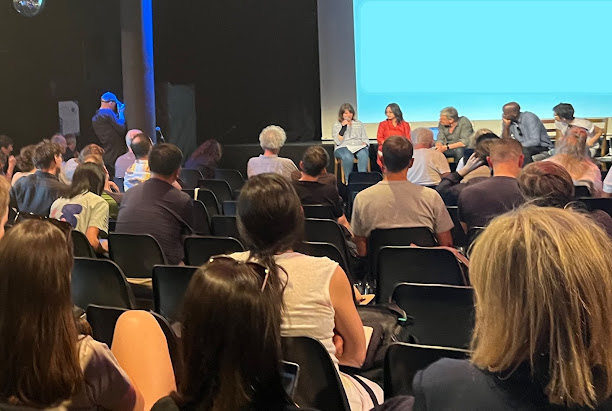
Tracing Ukrainian tech-ecosystems at ICT Spring in Luxembourg
18 July, 2023
New Project: "Digital urban futures - Urban reconstruction efforts in the headquarter City of Kyiv and the role of emerging tech-ecosystems (RE-DIGICITY)"
We are delighted to announce that Dr. Olga Kryvets was awarded a Marie Curie grant from the MSCA4Ukraine Fellowship Scheme under the supervision of Constance Carr.
Project Description
RE-DIGICITY is an extension to work (KYIV-DIGIURB) commenced at DGEO, exploring how large digital corporations such as Amazon or Google were involved in reconstruction and resilience in Kyiv. This work built on Carr’s (2021) project, entitled “Digital Urban Development - How large digital corporations shape the field of urban governance (DIGI-GOV).” Funded by the Luxembourg National Research Fund, DIGI-GOV examines the role of large digital corporations in digital urban development in Toronto, Seattle, Washington DC, Luxembourg and Amsterdam (Carr/Hesse 2020, 2022; Bast/Carr/Madron/Syrus 2022; Carr/Bast/Madron/Syrus 2022). RE-DIGICITY expands the horizon to include Microsoft and Samsung as well as smaller enterprises, which together constitute an emerging tech-ecosystem in Kyiv. RE-DIGICITY thus offers fresh insight into processes of urban digitalization (Ash/Kitchin/Leszcznski 2016; Karvonen/Cook/Harstaad 2020) looking at how tech-ecosystems affect digital urban futures in an East-European headquarter city (Gnatiuk/Kryvets 2018; Mykhnenko 2020) undergoing post-disaster reconstruction. RE-DIGICITY is thus a chance to call attention to the ways that contemporary digital cities are (re)constructed and (re)planned.
Reconstruction and Digital Futures
The invasion, “caused an avalanche of civilian casualties and a large-scale destruction of civilian infrastructure, while Ukraine’s forced displacement and humanitarian needs continue to grow exponentially” (Mykhnenko/Delahaye/Mehdi 2022: 714). Despite ongoing destruction, in June 2022, the Ministry of Temporarily Occupied Territories of Ukraine (MTOTU) (2022) approved the ‘Transition Period Policy’ to begin reconstruction. Around this time too, Amazon, Google and Microsoft were awarded for their efforts in reinforcing Ukraine’s digital infrastructures/services (Nolan 2022). From pie-in-the-sky dreams of Eurovision 2023 in Mariupol, to dreams of modernized urban infrastructures/services (Hay et al. 2022), to immediate needs of clean water, medical supplies, and critical infrastructure (United Nations Office for the Coordination of Humanitarian Affairs (UNOCHA) 2022), reconstruction in Ukraine was operating at various temporal and spatial scales, through a multitude of narratives responding to different imaginaries. Just as Paidakaki/Moulaert (2017) viewed resilience as granular, so too was the character of reconstruction and the multitude of coeval resilience agendas in Ukraine. It was “a highly political, continuously changing, socially transformative process,” (ibid. 2017: 4). RE-DIGIGOV explores these in relation to coeval efforts at urban digitalization.
An Eastern Headquarter City
Kyiv, the capital city and most economically prosperous area of Ukraine (Mykhnenko 2020), is recognized as Ukraine’s corporate centre, home to older oil, coal and steel production firms, and since the 1990s, home to more and more firms in finance. Recently, a number of international IT firms have also settled, solidifying new economic sectors and growth in the City and country—which, further, are components of wider processes of neoliberalization in the post-socialist, post-industrial city (Gnatiuk/Kryvets 2018; Gnatiuk/Melnychuk 2022; Havryliuk/Gnatiuk/Mezentsev 2021).Today, Kyiv’s IT sector has a broad inventory, and these tech-ecosystems signify the strengthening of new business sectors in a post-socialist, neoliberal economy, and the delivery of a new digital urbanism in Kyiv, a ‘relational’ (Wong/Hesse/Sigler 2022) headquarter city.
Research Questions
RE-DIGICITY addresses research questions operationalized across three domains: i. reconstruction and digital urban futures; ii. relational headquarter cities; iii) tech-ecosystems in conditions of authoritarian aggression.
Methods
RE-DIGICITY’s methodological approach inspired by the processuality of urbanization (Carr/Hesse 2020), ‘interpretative institutionalism’ (Bevir/Rhodes 2006), and urban relationality (Wong/Hesse/Sigler 2022). First, understanding the complexities of urban tech-ecosystems in the context of urban reconstruction requires an examination of the processuality of urbanization. This approach has roots in urban political ecology and focusses on social productive processes because “‘the urban’ is a complex, multiscale and multidimensional process where the general and specific aspects of the human condition meet,” (Keil 2003, 725). Further, a qualitative approach respecting processes uncovers the “thick and rich description of the discourses” (Kenis 2019, 836).
Second, a qualitative approach can assess how institutions are shaped, emphasizing the rationale, background conditions, and justifications that inform decision-making processes, to explain why people/institutions behave as they do. The interpretive institutionalism approach developed by Bevir and Rhodes (2006) provides such tools to generate insight.
Third, by examining Kyiv as a headquarter city, RE-DIGICITY draws on the relational approach rooted in scholarly debates about urban comparison that expose how cities are interconnected and constitute one another (Robinson 2011). In this approach, urban spaces are not bounded territories, but conduits of connection and productive processes that reach and extend beyond specific territories (Uitermark et al. 2012). In this vein, RE-DIGICITY is inspired by Wong et al. (2022) who argued that a city’s positionality in international flows, “is derived from mediating between regionally and globally scaled processes” (Wong/Hesse/Siger 2022: 502): Kyiv’s headquarter strategy can also be conceived of as a “niche center of corporate domiciling” (ibid.: 503).
The conceptual approach translates into a rigorous survey of secondary sources, including media reports, government documentation, videos documentation, and more. The goal is to obtain an overview of the scope and volume of the discourse. Narratives drawn from follow-up interviews can then be triangulated against the written discourse, to achieve a deeper understanding of discourses, conflicts, and positions.
References
Ash, J./Kitchin, R./Leszcznski, M. 2016. Digital turn, digital geographies? Progress in Human Geography, 42:1,25- 43.
Bast, D./Carr, C./Madron, K./Syrus, AM. 2022. Four reasons why data centers matter, five implications of their social spatial distribution, one graphic to visualize them. Environment and Planning A, https://doi.org/10.1177/0308518X211069139
Bevir, M./Rhodes, R. 2006. Governance Stories. London: Routledge.
Carr, C. 2021. DIGI-GOV Project Summary. https://orbilu.uni.lu/bitstream/10993/45932/1/DIGI-GOV%20Brochure%20January%202021.pdf
Carr, C./Bast, D./Madron, K./Syrus, AM. 2022. Mapping the clouds: The matter of data centers. Journal of Maps
Carr, C./Hesse, M. 2020. When Alphabet Inc. Plans Toronto’s Waterfront: New Post-Political Modes of Urban Governance, Urban Planning, 5:1,69-83.
---- 2022. Technocratic Urban Development: Large Digital Corporations as Power Brokers of the Digital Age. Planning Theory & Practice, https://doi.org/10.1080/14649357.2022.2043717
Gnatiuk, O./Kryvets, O. 2018. Post-Soviet residential neighbourhoods in two second-order Ukrainian cities: Factors and models of spatial transformation. Geographica Pannonica, 22:2,104-120.
Gnatiuk, O./Melnychuk, A. 2022. Housing names to suit every taste: neoliberal place-making and toponymic commodification in Kyiv, Ukraine. Eurasian Geography and Economics, DOI: 10.1080/15387216.2022.2112250
Hay, A./Karney, H./Martyn, B.N. 2022. Reconstructing infrastructure for resilient essential services during and following protracted conflict: A conceptual framework. International Review of the Red Cross.
Havryliuk, O.,/Gnatiuk, O.,/Mezentsev/K. 2021. Suburbanization, but centralization? Migration patterns in the post-Soviet functional urban region – evidence from Kyiv. Folia Geographica, 63:1,64-84
Hesse, M. 2022. Project Description FINCITY. https://orbilu.uni.lu/bitstream/10993/50569/1/Excerpt%20from%20FINCITY%20Project%20Description.pdf
Karvonen, A./Cook, M./Harstaad, H. 2020. Urban Planning and the Smart City: Projects, Practices and Politics. Urban Planning, 5:1,65-68.
Keil, R. 2003. Progress report: Urban political ecology. Urban Geography, 24:8,723–738.
Kenis, A. 2019. Post-politics contested: Why multiple voices on climate change do not equal politicisation. Environment and Planning C, 37:5,831–848.
MTOTU 2022. State policy of the transitional period. https://minre.gov.ua/project/derzhavna-polityka-perehidnogo-periodu
Mykhnenko, V. 2020. Causes and consequences of the war in eastern Ukraine: An economic geography perspective. Europe-Asia Studies, 72:3,528-560.
Mykhnenko, V./Delahaye, E./Mehdi, N. 2022. Understanding forced internal displacement in Ukraine: insights and lessons for today’s crises. Oxford Review of Economic Policy, 38:3,699–716.
Nolan, B 2022. Zelenskyy awards Amazon the Ukraine peace prize after AWS helped save its ‘digital infrastructure’. Business Insider. https://www.businessinsider.com/zelenskyy-amazon-ukraine-peace-prize-digital-war-support-aws-2022-7?r=US&IR=T
Paidakaki A./Moulaert F 2017. Does the post-disaster resilient city really exist? International Journal of Disaster Resilience in the Built Environment, 8:3,275–291.
Robinson, J. 2011. Cities in a world of cities: The comparative gesture. International Journal of Urban and Regional Research 35:1,1952.
Uitermark, J,/Nicholls, W./Loopmans, M. 2012. Cities and social movements: Theorizing beyond the right to the city. Environment and Planning A, 44:11,2546–2554.
UNOCHA2022. Situation Report. https://reports.unocha.org/en/country/ukraine/
Wong, C./Hesse, M./Sigler, T. 2022. City-states in relational urbanization: the case of Luxembourg and Singapore, Urban Geography, 43:4,501-522.
05 July, 2023
PhD-Candidate in Geography / Spatial Planning---There are 10 days left to apply
Your role:
Prepare a doctoral thesis in geography and/or planning, within the context of global urban studies, as we explored it through our past research project GLOBAL and the ongoing FINCITY research. In this context, it is our particular interest to find out what being small-but-global means for development and planning. While the above projects were focussing on urban and metropolitan governance more generally (GLOBAL), and commercial real-estate markets in particular (FINCITY), we propose to study further fields of application. These could be, for example, the science-policy interface in geography and planning (aka transfer), or the notion of flows (logistics) and how it collides with the configuration of places. Apart from that, we are also interested in learning about candidates’ own proposals, as far as these are situated in the above broader context.Profile:
In short:
Contract Type: Fixed Term Contract 36 MonthsHow to apply:
Applications (in English) should contain the following documents: A detailed curriculum vitae; Copies of Master Diploma; Motivation Letter; Support letter from at least one recent scientific advisor/professor; A PhD proposal (min 2,000, max 2,500 words excluding bibliography) using the following format: Introduction and literature review Research objectives and expected contribution to the field Innovation/originality Methodology (including intended dataset to be used if empirical analysis) Work plan and expected timetable Bibliography.Here's what awaits you at the University:
03 July, 2023
We are delighted to welcome Prof. Rob Kitchin to the MSH in Belval, July 6 2023, 10:00-10:45 am
DGEO in co-operation with the ARL is delighted to welcome Prof. Rob Kitchin of Maynooth University will deliver a public talk on "Exploring Digital Space-Time" for the opening of the ARL International Summer School, July 6, 2023, 10:00-10:45 am
Abstract - Digital technologies are having a profound effect on the temporalities and spatialities of individuals, households and organizations. For example, we now expect to be able to source instantly a vast array of information at any time and from anywhere, as well as to buy goods with the click of a button and have them delivered within hours, while time management apps and locative media have altered how everyday scheduling and mobility unfold. The presentation will examine the relationship between time and space in the digital age, examining the production digital timescapes. It will illustrate the argument by charting the timescapes of smart cities.
The Summer School introductory keynote is open for remote attendances via the Webex platform.
- Listen in at: https://tinyurl.com/4mjvkxvj
- Webex number: 2731 796 4397
- Webex password: ARL2023
- Webex host: Constance Carr (contact: constance.carr@uni.lu)
- Link will open at 9:50 am
Those in Luxembourg are also invited to join in the Black Box, MSH, Belval Campus, July 6, 10:00-10:45 am. Because space is limited, please RSVP to constance.carr@uni.lu by midnight on Tuesday, July 4th so that we can accommodate appropriately.
25 June, 2023
New Project - Relational geographies of the urban digital growth machine: Mapping the socio-spatial pathways (DiGiMap)
Project Summary
DiGiMap seeks out new geographies of what Rosen/León (2022) call “the digital growth machine” (DGM), how it emerges at various spatial scales, and changes contemporary urban realities of planetary urbanization (Brenner/Schmid 2015). DiGiMap is a PhD project that will expose spatial relations constituting new digital infrastructures, networked ‘cyberworlds’ (Kitchin/Dodge 2014) and their socioeconomic compositions. Engaging narrated cartographic illustrations and related qualitative analyses, new understandings of planetary urbanization will be platformed, highlighting irregularities of digital spatial development and the impacts on sociospatial disparities.
Rosen/León (2022) describe the DGM as combining traditional urban growth, spatial commodification patterns with that of digitally mediated accumulation dynamics, revealing increasingly asymmetric logics that shift urban processes to the authority of digital entrepreneurs—affirming work at DGEO that shows how large digital corporations are new ‘power brokers’ in urban development (Carr/Hesse 2022; Bast et al. 2022; Carr et al. 2022). Furthermore, articulating the new geographies of DGMs is urgent against escalating socioeconomic polarization, the COVID-19 pandemic and climate change: The search for “socially just and ecologically sound urbanism” (Graham/Marvin 2022: 6), confronting uneven spatial development (Brenner/Schmid 2015) is urgent.
At the same time, Rodriguez-Pose (2018) exposed a disparity between places able to propagate contemporary economic dynamics and those ill-adapted as ‘places left behind’.’ Vetting areas with poor development options, Rodriguez-Pose (2018) reveals the increasing disenfranchisement of ‘places that don’t matter’ that confront a “future offer[ing] no opportunities, no jobs, and no hope” (ibid:. 20). DiGiMap links this concept to DGMs and aims to expose the disparities caused when DMGs concentrate in certain cities spatially, (dis)advantaging social milieux, and generating new geographies of relational cities (Wong et al. 2022). Recent urban inquiry has addressed implications of such escalating digital architectures (Ash et al. 2016). DiGiMap will search out the (social)(Infra)structures that constitute DGM geographies, and expose spatializations of socioeconomic disparities, reforming our understanding of the urban in relation to advancing processes of digitalization:
“..complex geographies of selected connectivity […] need to be the focus of renewed research. Such analyses must address how the resulting infrastructural landscapes both enable and delimit new distanciated configurations […] patterns of urbanization, architectural and geo-political formations, geo-economic divisions of labour, and structures of social and political life” (Graham/Marvin 2022:4)
DiGiMap will search out answers to: What are the emerging socioinfrastructural components of DGMs shaping urbanity? How can DGMs be relationally understood? How do advancing geographies of uneven digital development spawn social inequalities?
Conceptually, DiGiMap draws on Brenner/Schmid’s (2015) planetary urbanization—which rests on Lefebvre’s (1991) concept of a mille feuille—to convey geographies of uneven spatial digital development. While planetary urbanization has invoked broad debate (Oswin 2018), planetary urbanization exposes spatial character/condition of contemporary urbanity, and DiGiMap can articulate the pastry of social spaces that constitute DGMs.
Methodologically, DiGiMap follows Diener et al. (2001) who empirically illustrated the urban mille-feuille by compiling a “thousand leaves” (Brenner 2015)—exposing Swiss (early millennial) infrastructures as relationally and functionally interconnected, with social spatial consequence: All of Switzerland was urban (ibid.) was the exceptional and profoundly influential finding, radically departing from standard knowledges of Swiss urban space, and overcoming the divided and vested interests of urbanists and ruralists. DiGiMap will similarly chart relational and functional interconnections of infrastructure with a reconfigured emphasis on the nuances of contemporary DGMs.
Empirically, DiGiMap will focus on Luxembourg and Zurich, comparable (Carr/Hesse 2022) in terms of economic growth agendas, high degree of internationalisation, patterns of urbanization, and targets of development/maintenance of innovation economies (Luxembourg 2023; Switzerland 2023).
DiGiMap will scope emerging digital infrastructures unfolding at multiple scales across Luxembourg and Zurich, crossplotting subtleties and differentiation between social, economic and political specificities related to digitalization at different spatial scales. By combining and interpreting diverse data, the workflow facilitates an understanding of how physical attributes and features can be linked-to and associated with various geographical features, relations and patterns.
Interviews with stakeholders will help to contextualise mapping, examining how participants view policies/knowledge/values and processes associated with DGMs.
References
Human Geography, 42:1, 25-43.
Bast, D., Carr, C., Madron, K., Syrus, AM. (2022) “Four reasons why data centers matter,
five implications of their social spatial distribution, one graphic to visualize them”
Environment and Planning A: Economy and Space.
Brenner, N., Schmid, C. (2015) “Towards a new epistemology of the urban?” City, 19:2-3,
151-182.
Carr, C. et al. (2022) “Mapping the clouds: The matter of data centers” Journal of Maps
Carr, C. and Hesse, M. (2022) “Technocratic Urban Development: Large Digital Corporations as Power Brokers of the Digital Age” Planning Theory & Practice, 23:3,476-485.
Diener, R., Herzog, J, Meili, M., de Meuron, P., Schmid, C. (2001) “Switzerland - an Urban Portrait.” Birkhäuser, Basel.
Graham, S., Marvin, S. (2022) “Splintering urbanism at 20 and the “Infrastructural Turn”
Journal of Urban Technology, 29:1, 169-175.
Lefebvre, H. (1991) The Production of Space. Blackwell, London.
Luxembourg, Grand Duchy. (2023) “Digital Luxembourg: Initiatives”
https://digital-luxembourg.public.lu/initiatives Accessed Feb. 11, 2023.
Oswin, N. (2018) “Planetary urbanization: A view from outside” Environment and Planning D:
Society and Space, 36:3, 540-546
Rodríguez-Pose, A. (2017) “The revenge of the places that don’t matter (and what to do
about it).” Cambridge Journal of Regions, Economy and Society, 11 (1). pp. 189-209.
Rosen, J. and León, LFA. (2022) “The Digital Growth Machine: Urban Change and the Ideology of Technology” Annals of the American Association of Geographers, 112:8, 2248-2265.
Switzerland, Confederation of. (2023) “Transforming Switzerland into a Leading Digital Nation” https://digitalswitzerland.com/ Accessed Feb 11, 2023.
Wong, C., Hesse, M., Sigler, T. (2022) ‘City-states in relational urbanization: the case of
Luxembourg and Singapore” Urban Geography, 43:4, 501-52
15 June, 2023
DGEO looks forward to hosting the ARL International Summer School
The ARL – Academy for Territorial Development in the Leibniz Association in cooperation with the Department of Geography and Spatial Planning at the University of Luxembourg are looking forward to the ARL International Summer School 2023.
The topic of the summer school is 'A Contested Relationship? Urbanisation & the Digital, vs. Digitalisation & the Urban'. 06-08 July 2023 and University of Luxembourg, Campus Belval.
This year, the Summer School is situated within recent debates and developments about what was initially called ‘smart cities’. Judging from our observations, related urban policy frames have reached another level of sophistication, after having undergone uncritical praise and popular tech-hype by the 2010s (in what could be understood as a Phase 1), and the more recent practice of policy formulation, implementation and aiming for local impact (which could be considered a Phase 2). We are now looking forward to discussing subsequent events and outcomes in the complex, often contested relationship between urbanisation and the digital, and digitalisation and the urban, respectively. These developments include the more subtle forms of how digital means and processes have become entrenched in urban practices, collective and individual. They comprise issues of surveillance and control (for example in urban domains, or at the workplace); components of infrastructure that provide the backbone of related systems (such as data centres); just-city frames that have risen in response to perceived digital divides in societies; or systems of provision in retail and services that tend to become hegemonic, if not totalitarian (such as Amazon.com). Various forms of governance are also involved here, not only at municipal levels, but also fostered by national and metropolitan governments, for example in strategies of smart specialization.
The programme
This year, we are delighted to welcome four distinguished experts who will contribute with keynote lectures, and tutoring to the Summer School programme:
- Prof Andrew Karvonen, Lund University, Sweden
- Prof Rob Kitchin, Maynooth University, Ireland
- Priv.-Doz. Dr Bastian Lange, multiplicities, Berlin/University of Leipzig, Germany
- Dr Julia Rone, University of Cambridge, United Kingdom
In addition, contributions from 12 doctoral students are foreseen which have been selected through a competitive process internationally and across a range of disciplines, such as geography, planning, urban studies and other social sciences and humanities.
INURA 2023 - Kryvets and Carr talk about reconstrution in Kyiv - Part II
INURA conferences always have two parts: The City part, where local INURA organizers present the city through various tours, and the Retreat part where INURA participants gather to discuss their work and think about common projects and urgent urban issues.
During the City part, Carr was invited to join a panel at the Zentralwascherei to comment on Zurich development from the perspective of Luxembourg, and drawing on past research in the Glatt Valley. Kryvets was also invited to speak about Kyiv reconstruction at a public panel discussion on “Crises and urban action”. Her statement can be found here. Both panels were chaired by Prof. Dr. Christian Schmid (D-ARCH, ETH Zurich). At the Retreat, Carr joined a panel with Anastasiia Ponomaryova (NGO Urban Curators, Ukraine); Mariia Prystupa (Kharkiv National University, Ukraine / University of Helsinki, Finland); and Dr. Gruia Badescu, (University of Konstanz, Germany) and reported on challenges articulated by their interviewees. Of course, the Ukrainian government has set broad reaching priorities; These include removing land mines, providing housing, becoming energy independent and working towards European integration. The challenges articulated in Kryvet & Carr's work is not intended to undermine these, but to underscore that at the urban level, recurring themes arose. These include fighting corruption, building systems of transparency and inclusion, addressing the question of who will come back to which cities, figuring out which businesses will new cities need, and determining where to make financial investment.
08 June, 2023
INURA 2023 - Kryvets and Carr talk about reconstrution in Kyiv - Part I
Last week, Kryvets and Carr attended the 31st conference of the International Network of Urban Research and Action (INURA), 2023 in Zurich. During the public panels held at the Rote Fabrik, Kryvets joined Dr. Tammy Wong (Osaka Metropolitan University, Japan); Prof. Dr. Jorge Peña Díaz (CUJAE, Cuba), and Dr. Alokananda Mukherjee (Jadavpur University, India) on a panel entitled, “Crises and urban action” chaired by Prof. Dr. Christian Schmid, (D-ARCH, ETH Zurich).
Kryvet's statement, co-written with Carr and entitled, "From Maidan to resilient urban futures" is printed here.
"Good evening everyone. Hello, my name is Olga Kryvets.
Before the full-scale invasion began, I was the Head of the Patent and License Department at Taras Shevchenko National University of Kyiv, where it was my job to promote technology. I was also a researcher for the interdisciplinary think tank for socio-economic well-being and mental health.
I have a PhD in economic and social geography, and it is also relevant to mention that I was also at Maidan 10 years ago. At that time, I was working with engineers in a scientific laboratory and together my colleagues and I came to support the students refusing the dictatorial policies of Kremlin-friendly Yanukovych, supported by his special police forces, the Berkut and the Titushky. Maidan represented the next generation of Ukrainians absolutely refusing to be subjugated to the criminal networks of corruption, and insisting on nothing less than policies and strategies towards the building of institutions that characterize modern democratic society. Today, many still do not realise that Maidan was a revolution, as afterwards Ukraine was able to orient to the west, and Yanukovych and his friends were overthrown. Of course, now, Kremlin aggression has come back with unspeakable ferocity.
As many of you know, I fled Kyiv in spring of 2022. In response to the war, the EU created a framework for Temporary Protection of Ukrainians, allowing them to live and work in EU countries. Furthermore, both the Luxembourg National Research Fund and the University of Luxembourg set up a grant system, and I along with 30 other Ukrainians, joined the Faculty of Humanities, Education and Social Sciences. As someone with a PhD in economic and social geography, with an understanding of innovation ecosystems, I was paired with Connie to work look at how Amazon and Google challenge urban development and governance.
It’s a gigantic project that looks at Washington DC, Seattle, Toronto, Amsterdam, and Luxembourg. My work formed a sixth pillar of the project that looked at Kyiv, and to understand the narratives around resilience and reconstruction in Kyiv, and how this is shaped by digitalization and innovation. We surveyed hundreds of documents, media reports, public speeches given by Ukrainian mayors, as well as the President of Ukraine. We also interviewed urban planners, architects, representatives from NGOs and international organizations involved in damage assessment, reconstruction, urban planning and development.
The blackout period in Ukraine was also a challenge for us too. It was during this period that we started conducting interviews with experts, and at that time in Ukraine there was only 2 hours of electricity a day. Our experts got in touch from the unbreakable spaces (punkty nezlamnosti), from offices with electricity, or from home, turning on the generator and the starlink.
So far, our results reveal (1) a snapshot of the scale of reconstruction needed after the first 14 months of the war, (2) an idea of how digitalization has become essential for resilience and (3) the diverse set of imagined futures unfolding at different spatial and temporal scales.
Assessing the scale of damage Ukraine-wide at any one point of time is difficult as there are various sources, that provide assessments at different points in time, and because reconstruction is already in process, moving at different speeds and reflecting a multitude of priorities: By August 2022 damage was recorded including over 300 bridges, 24,000 km of roads, 19 airports, 15,300 high-rise buildings, 116,000 houses, 390 businesses, 43,700 units of agricultural machinery, 2000 shops, over 500 administrative buildings, over 100,000 cars, 764 kindergartens, 934 medical facilities, 634 cultural buildings. At that time, drone photography revealed damage in cites at sites of commerce, gastronomy, education, sports facilities, churches, hotels, recycling, water and heating infrastructure, and housing.
According to Kyiv School of Economics damage to infrastructure, by December 2022 was valued at 137.8 billion Dollars. By February 2023, estimates reached 700 billion, and this did not include investments that would be needed for business growth.
While there were over 18,000 reports of damage inside Kyiv, including 6000 buildings, the city of Kyiv itself - which was not overthrown - is still relatively intact inside its perimeters compared to its suburbs and other parts of the country. According to the Kyiv Regional Military Administration, 252 settlements across the Kyiv region were occupied, and many territories have since been liberated back to Ukraine, although they are now full of mines.
Of course, the government has set priorities for reconstruction, and these include energy independence, removing the land mines, providing housing for internally displaced persons, combating corruption, and European integration. We also know that big tech – Microsoft, Google and Amazon – have all won peace prizes for their contributions to resiliency during the war.
But in terms of the future of Ukrainian cities, we heard a lot of optimism among our interviewees.
First, the cities should be smart, digital. Interviewees noted that the digitalization of management processes and the creation of digital solutions have already proven necessary for resilience, and they will continue to be important instruments to improve the lives of residents, simplifying the interaction of local governments with local residents, and enhancing transparency. Such digital services include various applications, but also open data, open maps and other sources of open information that can help local governments be more transparent, more open and understandable to local residents.
Second, they should be cities with a vision and concept. Interviewees noted that an important condition for urban development was the availability of master development plans, restoring too the synergy between all actors at the local level, and reflecting local needs, such as housing, which was cited by many interviewees as a primary need because of the mass internal displacement. But it was also often said that the new cities will be cities of a new generation, of a new type: green and democratic.
Third, they should be cities for the communities who live in them. Many said that the future cities should be for the residents. As post-war cities, they need to be safe cities, energy-efficient cities, and energy-independent cities. Of course, these visions reflect immediate needs, such as access to heat, electricity, and the internet. And hence Ukrainian cities are now characterized by personal generators, Starlink receivers and smart phone access to real time information. But it also reflected the need to build long term systems of resilience against further aggression. If we recall the revolution in 2014, we know that this conflict is ongoing.
Our interviewees were very aware of the diversity of needs across the different cities of Ukraine. There might be, for example, new cities that are symbolic cities, such as Kherson, Mariupol or Bakhmut. They also recognized that it makes no sense to restore cities to the state they were before. They will need to reflect the new situation: with the closed border, and with the war.
In this context, many interviewees also saw the new cities as opportunities to, fourth, rebuild with love and solidarity (Yes, we are reminded of Tammy’s work on Hong Kong!). Many dreamed of building comfortable cities; welcoming, inclusive, and sustainable cities in the environmental sense; and cities that reflected of belonging to the European community.
“They will be better than they have been so far. …built on the motivation that is there now.”
08 May, 2023
It’s showtime—talking about development, planning and housing, and Royal issues as well
13 April, 2023
INURA 2023 in Zurich upcoming in June. Registration Open
Since 2010, when the 20th INURA Conference was organized in Zurich with the topic “New Metropolitan Mainstream”, the planetary crises have deepened. There are many reactions to these crises that crosscut old habits for urban living and ineffective spatial practices such as commodification, gentrification, exclusion, evictions, extended urbanization, and many more. In some cases their associated challenges are overcome, however, through collective civic practices that are capable of reversing the course of destruction.
Guests from India, China, Australia, African, Latin and North American countries, and from various European countries will be joined by local activists and scholars, to explore critical topics related to housing and the social question, to developments beyond the inner city, and to current crises and urban actions. From the city of Zurich, past the cantonal borders, and all the way to the Alpine region of Maloja, the conference participants will immerse themselves in present Swiss realities. These intense exchanges and synergies created during the conference will expand in future visions, projects, conferences and publications, a practice of the INURA network proved throughout its last three decades of existence (see inura.org).
Find the program here: https://inura23.wordpress.com/city/
Press Release here: https://inura23.wordpress.com/press-release/
06 March, 2023
INURA Bulletin No. 33 is out
Our post-conference reflections from the 30th Anniversary Conference of the International Network for Urban Research and Action (INURA) in Luxembourg is out. Download the INURA Bulletin No. 33, edited by Carr and Madron, here:
24 January, 2023
Call for Applications for our next ARL Summer School 2023 in Luxembourg!
The ARL in co-operation with the Department of Geography and Spatial Planning invite applicants for the ARL International Summer School 2023, entitled,
A CONTESTED RELATIONSHIP? Urbanisation & the Digital vs. Digitalisation & the Urban
in Luxembourg, 6 to 8 July, 2023.
We invite advanced doctoral students from all disciplines to apply and we are looking forward to having an inspiring event!
For more information, check out the Summer School website or have a look at the call for application.
18 January, 2023
Fundraising for the Faculty of Geography, Taras Shevchenko National University, damaged by missles
![]() |
| Missile attack on the Taras Shevchenko National University (open source photo also published at zn.ua, 2023) |
We are sad to report that as a result of missile attacks on the City of Kyiv on December 31, 2022, the building of the Geography Faculty of Taras Shevchenko National University of Kyiv (TSNUK) was damaged, destroying windows, stained glass windows, and wrecking furniture.
Employees of the Faculty of Geography, students and graduates gathered on New Year's Day to clean it up – repair work carried out by everyday people, donating their time, their labour, and material and financial resources.
Professor Serhii Zapotoskyi, Dean of the Faculty of Geography (TSNUK) launched a fundraiser to assist in repairs and reconstruction.
IBAN: UA353052990000026203750212012
SWIFT CODE/BIC: PBANUA2X
Bank Name: JSC CB Privatbank (Bank of beneficiary, 1D Hrushevskyi Street, 01001 Kyiv) // JP Morgan AG (Intermediary Bank, Germany, swiftcode CHASDEFX)
Country of bank: Ukraine
Name of beneficiary: Serhii Zapototskyi
Address of beneficiary: Lomonosova, Building 71v, flat 12, 03022 Kyiv, Ukraine
![]() |
| Photo by Sergii Zapototskyi, 2023 |
![]() |
| Photo by Sergii Zapototskyi, 2023 |
![]() |
| Photo by Sergii Zapototskyi, 2023 |
![]() |
| Photo by Sergii Zapototskyi, 2023 |
13 January, 2023
Lasst uns doch mal die alten Artikel (wieder-)lesen. or: Let's re-visit the old stuff.
Im Herbst waren Kollege Florian Hertweck und ich zu Gast bei einer zivilgesellschaftlichen Initiative, die sich für mehr Denkmalschutz, einen besseren Umgang mit dem Baubestand sowie weniger Abriss im wachstumsgetriebenen Luxemburg einsetzen. Über einen dort anwesenden Redakteur des 'Luxemburger Wort' und sein Interesse an einem Interview wurde mein Kontakt zur Zeitung wieder aufgefrischt. Das Ergebnis wurde am 13. Januar 2023 veröffentlicht. Ein längeres Gespräch über das Planen, Bauen sowie die Politik, mit einem teaser auf der Titelseite.
Ist alles dazu gesagt? Im Prinzip ja. Es gibt auch - unwissenschaftlich formuliert - haufenweise Publikationen und Berichte zu diesem Thema, wissenschaftliche Veröffentlichungen (mit und ohne peer review), solche die ans Allgemeinpublikum gerichtet sind u.v.a.m. Sage niemand, dass sich die Uni nicht mit dem Land auseinander setzen würde.
Gelegentlich ist auch der Blick zurück instruktiv. Das letzte Mal wurden Inhalte aus unserer Forschung auf der Titelseite des Wort am 8. Juli 2017 präsentiert. Damals hatte ich eine Einladung als Chefredakteur für einen Tag -- ein wirklich interessantes Unterfangen, gemeinsam mit der Redaktion über eine Auswahl von Beiträgen zu i.w.S. urbanen Themen zu beraten. Außerdem war mit dieser Rolle das Privileg verbunden, den Leitartikel des Tages zu verfassen. Der steht hier rechts, und aus Gründen der besseren Lesbarkeit kommt der Text hier unten im Original nochmal. (Der Text wurde übrigens 1:1 von der Redaktion übernommen, mit Ausnahme des an den Beginn des Titels gerückte "Und". Das klang dann vielleicht doch zu sehr nach Johannes R. Becher).
Damit verbunden ist die Preisfrage des Tages: stimmt die Diagnose noch? Sind die Bewertungen korrekt, oder hat sich seither Substanzielles geändert? Gelegentlich, so finde ich, ist es erhellend, die alten Texte zu konsultieren...


