29 January, 2022

New research project FINCITY


European Financial Centres in Transition

FINCITY is a multidisciplinary research project that focusses on how major global events coincide with broader processes of economic restructuring and financialisation in Dublin, Frankfurt/Main, and Luxembourg City —three of Europe’s most significant financial centres. More specifically, it aims to understand how these cities and other major European financial centres have been restructured in re-sponse to Brexit— which has expelled a large number of financial services firms from the UK, and COVID-19— which has redistributed population away from major urban centres toward smaller agglomerations and fundamentally altered the ‘labourscape’ in favour of telework. Both effects may also have ramifications for urban development and planning. The project is inspired by the dual nature of current conditions in continental European financial centres. 
 

(Dublin, Ireland, Waterfront 2015)

On the one hand, Brexit acts as a centripetal force, attracting large numbers of firms and employees to Luxembourg, Frankfurt, and Dublin (among other cities). To date, 7,600 financial sector jobs and €1.5 trillion in assets have relocated from London (Jones, 2021). According to the Financial Times, Luxembourg “has emerged as one of the biggest winners from the shift out of the United Kingdom: 72 companies, nearly all of them in financial services announced plans to relocate their EU operations from London” (Stafford, 2020). Similar figures support the migration of firms and their employees to the Dutch and German financial hubs. 

On the other hand, COVID-19 acts as a centrifugal force, with strong evidence suggesting that the cumulative impacts of telecommuting, firm restructuring, long-distance commuting, and firm decentralisation are likely to cause de-agglomeration. Within Europe, a recent EU report found that while only 15% of employees had teleworked before the pandemic, 25% of jobs were ‘teleworkable’ (Fana et al., 2020). Of the EU member states, Luxembourg has the highest proportion of jobs fit for telework (Fana et al., 2020). Similar patterns have emerged in the United States, where cities such as Austin, Texas, and Boise, Idaho, have absorbed a large number of Silicon Valley firms and workers, many of whom may never re-turn to the office. In Europe, further decentralisation is possible if banks’ back-office staff are permanently dislocated from central offices.

Our research programme

To explore the socio-spatial impacts of the current state of affairs, this project first builds an updated profile of each financial centre by investigating how the corporate geography of banks and financial services firms has changed over the past five years. Firm-level data will be compiled from various proprietary databases with a view to understand how Brexit and COVID-19 have reoriented the character and composition of advanced producer services within each city. Second, the reorientation of each city’s services agglomeration will be related to its spatial impact through a detailed investigation of local property markets as key indicators.

The nature of commercial property has changed considerably with a pivot to teleworking, larger floorplates (allowing for distancing) and the requirements of global firms whose foot-print extends far beyond the walls of their offices. Residential property has also been brought into sharper relief, with a greater preference for working from home, meaning that proximity to urban centres is potentially less important than space. This may affect small-but-global financial centres more significantly than global metropolises. 

Based on a combination of empirical data, extensive stake-holder interviews and focus group meetings, we interrogate which changes may play out in each market’s property sector, and how these relate to both global and industry trends. Finally, given the importance of regulation, the project concludes by investigating how policymakers and urban planners have responded to these multiple crises and their significance for urban policies and planning.

Job-opportunities

FINCITY seeks to hire a post-doc in global urban studies (contract with UL; duration 3 yrs) and a PhD-student in urban studies or economic geography (contract with LISER, duration 3+1 yrs). Pls consult the recruiting portals of the two institutions, see the links above. Applications are accepted online only. Both institutes offer a highly inspiring international work environment.

More information:

PIs: Prof Dr Markus Hesse, UL, Dr Sabine Dörry, LISER. Partners: Assoc. Prof Dr Thomas Sigler, University of Queensland, Australia/UL, Prof Dr Susanne Heeg, Goethe University Frankfurt/Main, Germany, Prof Dr Martin Sokol, Trinity College Dublin, Ireland.
Duration: 1 June 2022 – 31 May 2025. Funding provided by Fonds National de la Recherche (FNR), Luxembourg/CORE.
Contact: markus.hesse@uni.lu

28 January, 2022

New Publication in Environment and Planning A: Economy and Space

The growth and consequences of data centres is not known and largely not public. Great to see our map of data centres in the Washington Metropolitan Area and their impact published in Environment and Planning A.

Four reasons why data centers matter, five implications of their social spatial distribution, one graphic to visualize them

by Desmond Bast, Constance Carr, Karinne Madron, Ahmad Mafaz Syrus

Abstract Data centers constitute a new kind of telecommunications infrastructure that demands attention for four reasons. Data centers are under-examined in the social sciences literature, urban studies, in particular. Data centers present an under explored geography of cyberworlds. Large digital corporations such as Amazon or Google are expanding their role in urban infrastructural development (such as data centers), and it is necessary to research and explain this phenomenon. Data centers present challenges of urban governance. The graphic provided here visualizes the social spatial distribution of data centers in the Washington Metropolitan Area. There are five implications of their social spatial distribution. Data centers are concentrated in metropolitan areas. Data centers have a high demand for energy and water, competing with local residents for these resources. The data center industry is a state-led niche economy. The uneven distribution of data centers can invoke inter-county competition for tax revenue, in addition to access to the water, power, and land resources that data centers require. The scale of the problem is unknown because the input needs of many data centers are not publicly available.

You can read the full text and download the map here (Open Access):
https://doi.org/10.1177/0308518X211069139


This is the first publication resulting from Carr's FNR funded project entitled, “Digital urban development - How large digital corporations shape the field of urban governance, (DIGI-GOV),” (C20/SC/14691212/DIGI-GOV).

12 January, 2022

PhD-Student wanted: Ghent University, Belgium, Dept. of Geography

Overview of the position

Colleagues @UGhent are looking for a PhD student who will join the Social and Economic Geography (SEG) research group at the Geography Department of Ghent University, Belgium. The appointed PhD student will work on the project titled “The effect of teleworking on travel and well-being”, funded by the Research Foundation – Flanders (FWO) and supervised by prof. Frank Witlox (Ghent University) and assoc. prof. Jonas De Vos (University College London). They are seeking a candidate for a 4-year term. At Ghent University the PhD student will work at one of the leading universities in Western Europe. The SEG research group has conducted high-quality research on travel behaviour over the past years, collaborating intensively with experts in the field from universities abroad. 

Project summary

The current COVID-19 pandemic is likely to trigger more teleworking for a substantial share of employees in the coming years. However, existing studies have not yet come to a consensus on whether or not teleworking results in less overall travel, since fewer commute trips may be compensated for by more or longer trips for other purposes or even by workers relocating farther away from their work. Additionally, no studies have yet analysed the nature or extent of how people may change their daily time use and how not commuting may influence their subjective well-being. 
The proposed study has four core objectives: 1. To determine the relationship of teleworking with commuting patterns and the residential location; 2. To analyse the nature and extent of the effect of teleworking on workers’ activity-travel behaviour; 3. To evaluate the impacts of teleworking on the subjective well-being of workers; 4. To create a new comprehensive framework for the relationships between teleworking, and (changing) travel patterns, activity participation and well-being.

Required qualifications

- MSc degree in Geography (and broader social sciences), Spatial planning, Transport planning/engineering, or related field - Excellent written and oral communication in English - Knowledge of Dutch is an asset - Knowledge of statistical analyses (e.g., SPSS, AMOS), and GIS applications and techniques are an asset - Familiarity with travel behaviour literature is an asset Conditions of employment We offer a full-time position (38 hours/week) for a period of four years (2 + 2 years). The minimum net monthly salary is € 2.116,90 (depending on experience) + benefits. Employees of Ghent University have 39 days of (paid) leave per year. The PhD student will have office space at Ghent University’s campus “Sterre”. Ghent University is an equal employer institute.

Application instructions 

All individuals interested in this position must submit a short motivation letter, CV, and MSc academic transcript (in one PDF file, named “Last name_First name_FWO”) to prof. Frank Witlox (frank.witlox@ugent.be) and assoc. prof. Jonas De Vos (jonas.devos@ucl.ac.uk) by February 4th, 2022. The appointed PhD student is expected to start around April-May 2022.

17 December, 2021

Planning Conflicts in Plural Democracy

Call for Papers for a Special Issue, in preparation for Raumforschung und Raumordnung | Spatial Research and Planning


Topic and problem formulation

Globalisation, migration, climate change, post-fossil transformation and urban housing shortages are generating new protests and conflicts in plural democracies. Spatial planning is therefore increasingly confronted with the task of conflict management (Othengrafen/Sondermann 2015; Bertram/Altrock 2020): in large-scale projects (e.g. Stuttgart 21, Tesla Berlin-Brandenburg), with the energy transition (e.g. citizens’ initiatives opposing wind farms) or due to development pressure in cities (e.g. Tempelhofer Feld in Berlin). Planning actors face a dilemma in dealing with these conflicts. On the one hand, there are demands to speed up approval procedures, also in order to achieve widely accepted and public-welfare goals such as climate protection, the energy transition and housing construction. On the other hand, expectations concerning public participation are increasing. At the same time, there are demands for a fundamental rethink of classic types of citizen participation. “More participation”, direct democracy initiatives or referendum decisions often do not lead to the de-escalation of conflicts in plural democracies, but can rather exacerbate them and deepen divisions (Selle 2019). Finally, there is the risk of participation activities being dominated by populist actors. 
    A new balance between conflict and consensus may have to be found, in spatial planning as elsewhere. In international planning theory, the increased relevance of conflict has been addressed by approaches of agonistic planning (Gualini 2015; Pløger 2018). Drawing on the work of the political researcher Chantal Mouffe, these approaches view conflicts in pluralistic democracies as immanent and positive, and distance themselves from the consensus-oriented approaches of communicative planning theory (Bäcklund/Mäntysalo 2010). The suggestion is that it is important to transform antagonistic struggles between enemies into agonistic confrontations between opponents and to establish a “conflictual consensus”. An important prerequisite for the defusing of antagonistic conflicts is that the opponents accept the rules of conflict resolution.
    However, such understandings of planning do not fit with current practice, which seems to be increasingly characterised by strategies of post-politics or post-democracy (see Mössner 2016). Furthermore, agonistic approaches have not yet addressed how planning can deal with conflicts in practice in a concrete or productive way in order to achieve robust decision-making and thus strengthen pluralistic democracy. In Germany to date, agonistic planning approaches have hardly been taken up. There has also been little reflection in planning research on how effective planning approaches to conflict moderation and mediation (Diller 1996) have actually been in the past.

Objectives and key questions

The Special Issue seeks theoretical/conceptual and empirical practice-related papers that analyse and critically reflect on how spatial planning deals with conflicts. In addition to papers from planning research, contributions from political science or related disciplines are particularly welcome. The papers may be in German or English and can refer to local, regional or national planning levels in Germany and Europe. The aim is to include a mixture of national and international contributions in the Special Issue. The focus is intended to be on, but not limited to, the following key questions:

1. What experience has been gained so far in dealing with which conflicts in spatial planning?
2. What role has spatial planning played in dealing with conflicts (e.g. avoidance, moderation/mediation, negotiation)?
3. When and under which conditions has planning successfully tackled conflicts? When was this not the case and why?
4. To what extent do participatory processes in planning procedures transform antagonistic conflicts into agonistic ones?
5. Under what conditions can spatial planning contribute to conflict resolution in pluralistic democracy?


Just for illustration:
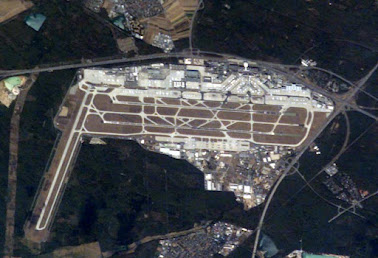
One of the constituting planning conflicts in Western Germany arose in the late 1970s / early 1980s concerning the expansion of Rhein-Main Airport in Frankfurt a.Main.
Image courtesy of Earth Sciences and Image Analysis Laboratory, NASA Johnson Space Center. [1]. Taken from an altitude of 383 km (207 nautical miles). Crop of an image from the series ISS006-E-52451 through ISS006-E-52454.


The building of the "Startbahn 18 West" caused massive, even violent citizens' protests and was subject to substantial political controversy at all levels of government.
Image: concrete fence protecting the construction of the Runway West. Courtesy Rainer Momann, http://www.momann.com.


Quality assurance

Call for Abstracts: Using an open Call for Abstracts, interested authors are asked to send a draft abstract of 150 to 250 words to the guest editors to ensure a thematic fit with the Special Issue in advance. In addition, the guest editors will contact recognised experts in Germany and abroad directly. 
Abstracts are due 31 January 2022
    Call for Papers: Authors of suitable abstracts will be invited to submit a manuscript. Manuscripts can be written in German or English and submitted as a “Beitrag / Article” or “Politik- und Praxis-Perspektive / Policy and practice perspective”. Submitted manuscripts should be prepared according to the journal’s Instructions for Authors (https://rur.oekom.de/index.php/rur/Authors).
    Double-blind peer review: As usual, all manuscripts will be subjected to an anonymous review process and will only be accepted on the basis of positive reviews. 

For subject-related queries, please contact the guest editors: Dr Manfred Kühn (manfred.kuehn@leibniz-irs.de) and Prof. Dr Markus Hesse (markus.hesse@uni.lu). For organisational queries, please contact the Editor-in-Chief Prof. Dr Andreas Klee (klee@arl-net.de).

Bibliography:

Bäcklund, P.; Mäntysalo, R. (2010): Agonism and institutional ambiguity: Ideas on democracy and the role of participation in the development of planning theory and practice – the case of Finland. In: Planning Theory 9, 4, 333–350. https://doi.org/10.1177/1473095210373684
Bertram, G.F.; Altrock, U. (2020): Auf dem Weg zur Normalität: Planungsbezogener Protest und planerische Reaktionen. In: Raumforschung und Raumordnung | Spatial Research and Planning 78, 2, 185–201. https://doi.org/10.2478/rara-2019-0059 
Diller, C. (1996): Die Regionalplanung als Mediatorin einer nachhaltigen Entwicklung. In: Raumforschung und Raumordnung 54, 4, 228–234.
Gualini, E. (ed.) (2015): Planning and Conflict: Critical Perspectives on Contentious Urban Developments. London.
Mössner, S. (2016): Sustainable urban development as consensual practice: Post-politics in Freiburg, Germany. In: Regional Studies 50, 6, 971–982. https://doi.org/10.1080/00343404.2015.1102875
Othengrafen, F.; Sondermann, M. (eds.) (2015): Städtische Planungskulturen im Spiegel von Konflikten, Protesten und Initiativen Berlin. = Planungsrundschau 23. 
Pløger, J. (2018): Conflict and Agonism. In: Gunder, M.; Madanipour, A.; Watson, V. (Hrsg.): The Routledge Handbook of Planning Theory. London, 264–275.
Selle, K. (2019): Öffentlichkeitsbeteiligung in der Stadtentwicklung. Anstiftungen zur Revision. Berlin. = vhw-Schriftenreihe 15.

28 November, 2021

SOUNDWALKS -- Walking, listening and recomposing everyday sounds of Esch-sur-Alzette


An exploration offered by Trond Maag and Andres Bosshard

Tuesday, 7th December, 14h30 -- Esch-sur-Alzette, Hôtel de Ville


This is a special offer to the students of MArch (Master in Architecture) and MaGeo (Master in Geography & Spatial Planning) @ uni.lu

Walking, Listening and Recomposing Everyday Sounds of Esch comprise three routes to discover the art of sound walking, exploring a specific topic characteristic for Esch's identity and development: City stories for the ear unearths the garden city's acoustic legacy and introduces visitors to contemporary strategies for making cities greener. Memories of the blue noise draws attention to the broken and obscured noises and sounds of the river Alzette, which flows underground the city squares. Fading thunders of Belval immerses visitors in immense dimensions of steel structures contrasting with expansive brick walls, monstrous cranes, and labyrinths of giant pipes that shape and direct today's everyday sounds.


We will explore the route “City stories for the ear” to unfold some of Esch’ sounds and their relationship to architecture, planning, urban design and public engagement. Brief introduction and first listening impressions, 30’ Exploring and working in small groups how sound and urban space interrelate, 50’ - Short break - Presenting and discussing observations and results, 50’.


Would you mind bringing tools such as paper, pencils, cameras, and smartphones to write / record / photograph / draw your observations?


Trond Maag, urbanist, and Andres Bosshard, sound architect, collaborate with planners and architects on different projects on the subject of urban sound. Their working practice involves active listening combined with walks within urban design processes. They are currently preparing sound experience walks through Belval and Esch as part of Esch2022.


Pls find here a few more pics from our walk. Urban acoustic exploration indeed provides a distinct sense of the materialities of the urban built environment, different ways of how to perceive the city, and may also give some important hints as to urban practices: urban layout, density, street design. What is also striking is the legacy of good urban planning provided by figures such as Joseph Stübben.


More information about the project is available here:

https://esch2022.lu/en/cultural-agenda/?project_number=867

https://urbanidentity.info/soundexperienceesch/


09 November, 2021

DECLARATION OF THE GLOBAL GEOGRAPHY COMMUNITY ON THE BIODIVERSITY AND CLIMATE CRISES #COP26

Geographers have unique opportunities and responsibilities in the face of the global biodiversity and climate crises. Geography is a discipline that is uniquely located at the intersection of the social sciences, natural sciences, and humanities. This equips geographers to be adept systems-thinkers and interdisciplinarians. It is furthermore an applied knowledge, focused above all on the state of our planet and our relationships with it. All of this makes the learning, teaching, and practice of geography centrally relevant to the closely-linked challenges of the global climate and biodiversity crises.

Geographers can do much more than present an analysis of these challenges. They also have a vantage point from which they can point to the kinds of thought and action that can deliver a better tomorrow for every person on Earth.

This October and November will see some of the most consequential weeks in terms of humanity’s collective relationship with planet Earth. In October the world’s governments will come together to confront the continuing dramatic loss of species and their habitats—the biodiversity crisis—compounded as it is by the accumulating impacts of climate change. It is hoped that the meeting will set the stage for ambitious new targets for the global conservation of nature out to 2030.

Around the same time, in Milan, Italy, and then, for two weeks in November, in Glasgow, Scotland, governments will reconvene to confront the existential challenge of climate change. It is widely hoped and expected that the meeting will set enhanced and more urgent reduction targets for greenhouse gas emissions out to 2030, as well as mandating a critical role for nature in climate change mitigation and adaptation.

Geographers, whether as students, researchers, educators, writers, explorers, practitioners in business or policy, or as engaged and curious travellers, encourage our leaders to make ambitious commitments to place the protection of nature and a liveable climate at the centre of the world’s economics and politics at this critical juncture.

Accordingly, we pledge that our institutions will redouble our efforts to apply the unique attributes that are the hallmark of the learning, teaching, and practice of geography to the global environmental challenges that have drawn together the world’s governments to these vital meetings this year. We commit to doing all that we can to apply geography’s potent capabilities to the task of making the coming decade one of hope and of positive action.

Adopted from The Royal Canadian Geographical Society, https://rcgs.org/about/news-releases/declaration-of-the-global-geography-community-on-the-biodiversity-and-climate-crises/

02 November, 2021

Best Paper Award for the Regional Studies Association eZine Regions

It was a great pleasure yesterday to meet Eduardo Oliveira, Klara Sobekova, Alex Holmes, Robert Bowen, Stefania Florentino, Michael Short and Nicola Livingstone at the online awards ceremony of the Regional Studies Association (RSA).  


Markus and I are amazed to learn that out paper Sidewalk Labs closed down – whither Google’s smart city was elected as one of two winners of the 2021, Regional Studies Association Best Paper Award for our eZine Regions.  Thank you RSA!


14 October, 2021

Ein neuer Mobilitätsplan für die Hauptstadt 

Mit einer öffentlichen Informationsveranstaltung im Studio des städtischen Theaters hat die Stadt Luxemburg am 13. Oktober den Startschuss für einen auf ca. 15 Monate angelegten Prozess gesetzt, der zur Erarbeitung eines neuen Mobilitätsplans führen soll. An der Versammlung haben neben der Bürgermeisterin sowie Mitgliedern des Schöffenrats auch Mitarbeiter der kommunalen Administration sowie ein externer Gutachter teilgenommen. Der Prozess ist, so wie es heute als gute Praxis gilt, mehrstufig aufgebaut und enthält neben einer Analyse der bestehenden Situation auch eine umfangreiche Beteiligung der Öffentlichkeit; auch lässt sich die Stadt durch ein Begleitgremium beraten, in dem Zivilgesellschaft sowie Vertreterinnen und Vertreter wichtiger Interessengruppen mitarbeiten. Vier fachlich orientierte Büros aus Deutschland und Luxemburg sind zur Unterstützung engagiert.


    Der Prozess fällt in eine Zeit, in der die urbane Mobilität auch in Luxemburg-Stadt lebhafter denn je diskutiert und hinterfragt wird. Seit Corona wird verstärkt gefordert, die unübersehbare Dominanz des Kfz-Verkehrs zu brechen und, beispielsweise, dem Radverkehr mehr Platz einzuräumen. Solche Anliegen wurden anfangs noch mit dem eher kuriosen Verweis auf die Historie der Stadt als Festung erwidert, deren Platz nun einmal begrenzt sei. Auch wurden einige temporäre Infrastrukturen (vulgo Pop-up Radwege) zum Ende der Sommerpause wieder entfernt; mit weitergehenden, strukturellen Lösungen tut man sich offensichtlich schwer. Dass die ‚Stad‘ auf diesem Gebiet glaubwürdig eine Vorreiterrolle einnehmen würde („Ville avant gardiste“), wie in ihren einschlägigen Publikationen bereits zu lesen war, wird wohl niemand ernsthaft behaupten können.
    Immerhin arbeitet man nun an einer Strategie, die es so bisher nicht gab. Damit holt die Hauptstadt eine Entwicklung nach, die in den Nachbarländern bereits vor dreißig Jahren eingesetzt hatte. Das ist im Licht des hiesigen Problemdrucks, einerseits, zweifellos zu begrüßen. Andererseits trügt die Hoffnung, dass man mit guten Absichten, sektoraler Politik und einer Prise Demoskopie das hartnäckige Mobilitätsproblem würde lösen können. Denn die Lehren dieser Praxis aus den Nachbarländern sind u.a., dass Ansätze auf den Gebieten der Verkehrsorganisation und -infrastrukturpolitik an sich das Mobilitätsbild nur begrenzt neu formatieren können. Mobilität und Verkehr sind kein Ressortgegenstand. Sie sind auf vielfältige Weise mit Nachbarfeldern – etwa der Stadtplanung – verzahnt. Will man, so die Wortwahl der Stadt, tatsächlich „integriert“ vorgehen, kommt man nicht umhin, die Silos der ingenieurmäßigen Betrachtung tatsächlich aufzulösen. Mobilität muss im Kontext von Städtebau, Wohnen, Arbeiten oder Freizeitverhalten betrachtet werden.
    Diese horizontale Einbettung des Verkehrs in Raumentwicklung, Wirtschaft und Gesellschaft ist das eine Grundproblem jeden Versuchs, den Verkehr neu zu gestalten. Die Messlatte hierfür liegt indes in Luxemburg außergewöhnlich hoch, höher als anderenorts – zum einen aufgrund der atemberaubenden Wachstumsraten des Sozialprodukts, die politisch aber sakrosankt sind, zum anderen durch Zufluss von außen durch die Grenzpendler. Zwar ist richtig, dass die Hauptstadt dieses Problem nicht allein lösen kann. Aber muss sie sich deshalb gleich für unzuständig erklären? Durch ihre Ansiedlungspolitik trägt sie ja selber massiv dazu bei, dass die Hauptstadt wie ein Schwamm im Wachstumsmeer fungiert. Wer mehr Arbeitsplätze ansiedelt, zieht auch mehr Verkehrsbewegungen an. Wäre es an dieser Stelle nicht sinnvoll, Telearbeit und digitale Vernetzung auf der Ebene der Großregion stärker zum Thema zu machen? Natürlich sind standortsuchende Unternehmen zunächst souverän in ihrem Handeln. Doch hat die Stadt das letzte Wort in der Verfügung und Nutzung von Grund und Boden – Entscheidungen über Art und Maß der baulichen Nutzung und damit zentrale Randbedingungen künftiger Verkehrsentwicklung werden dadurch gesetzt. Weitere große Verkehrserzeuger sind in Planung. Herrscht auch dort das Primat der Erschließung? Welche neuen Ansätze sind vom Mobilitätsplan diesbezüglich zu erwarten? Neben der Abstimmung unter den Agglomerationsgemeinden ist die gemeinsame Planung von Flächennutzung und Verkehr der Lackmustest für jeden integrierten Plan.
    Das zweite Kardinalproblem der Stadt- und Verkehrsplanung, an dem sich Fachplanerinnen und -planer abarbeiten, bündelt sich im Begriff des ‚scale‘. Damit ist das Maßstabsproblem in Raumentwicklung und Raumplanung gemeint, vor allem die Schwierigkeit, in miteinander eng verzahnten, gegenseitig voneinander abhängigen politisch-administrativen Systemen die richtige Entscheidungsstruktur zu finden. Die Hauptstadt ist hierfür paradigmatisch, denn sie ist Zentrum eines de facto-Stadtstaates, ohne dass sie die entsprechenden Steuerungsmöglichkeiten für seine räumliche Organisation besitzen würde. Dieses Problem ist nicht auf das Großherzogtum begrenzt, sondern zeigt sich im Grunde in allen Stadtregionen zwischen Zentrum und Umland. In einem Kleinstaat mit zwei-Ebenen-System wie Luxemburg ist das entsprechende Dilemma aber besonders ausgeprägt. Hinzu kommt, dass staatliche Organisationen (etwa der Straßen- und Brückenbau, die öffentlichen Bauten, die CFL, der Fonds Kirchberg) eine gewichtige Rolle in der Hauptstadt einnehmen, ohne dass sie jeweils automatisch auch die Ziele der Kommune teilen würden.
    Im Grunde kann ein neues Mobilitätskonzept der Hauptstadt ohne sehr enge Einbindung aller Agglomerationsgemeinden und des Staates nicht wirklich funktionieren. Die Frage danach wurde auch im Plenum gestellt. Als Antwort darauf wurde aber nicht mehr als ein lapidarer Verweis auf die eigene Nicht-Zuständigkeit gegeben. Dies gibt wenig Anlass zu Optimismus. Denn damit bliebe das Konzept von vornherein unter seinen Möglichkeiten -- es ist wenig plausibel, dass das Verkehrsbild in der Hauptstadt und in ihrem Einzugsbereich durch derart reaktive Strategien spürbar verändert werden kann. Dies wird jedoch verstärkt als eine ‚harte‘ Rahmenbedingung eingefordert, die vor 30 Jahren so noch nicht existierte: Klimapolitik erwartet besondere Beiträge zur Dekarbonisierung vom Verkehrssektor, die dieser bisher bei weitem schuldig geblieben ist. (Und selbst im Umgang mit dem Möglichen bleibt die Politik verzagt: was nützt die Tatsache, dass über 80 Prozent der Stadtstraßen als Tempo 30-Zone ausgewiesen sind, wenn nicht eine davon kontrolliert wird?).
    Den Antworten des Schöffenrates zufolge auf Fragen des Publikums – eine offene Diskussion war das noch nicht – stellt sich der Mobilitätsplan als proaktive Befragung des Publikums dar. Politik erscheint dann primär als Verwaltung des Möglichen, nicht als ambitioniertes Resultat kontroverser Abwägungen. Damit kommen wir zum dritten Wermutstropfen: der Beteiligung der Öffentlichkeit. Einerseits ist Partizipation der scheinbar heilige Gral des neuen Plans. Andererseits muss man im Licht vergangener Erfahrungen befürchten, dass Offenheit primär eine taktische Rolle spielt. Die Nagelprobe wird sein, wie genau eigentlich die Meinung der befragten Öffentlichkeit in die Entscheidungsfindung der Stadt einfließt. Dies ist auch dort, wo zuletzt partizipiert wurde, doch unklar geblieben. Je länger am 13. Oktober im Studio diskutiert wurde, umso weniger offen erschien die ganze Veranstaltung, hatte das Event eher den Charakter von Abschluss, nicht Auftakt. Aus einer Verteidigungshaltung heraus kann man aber nicht wirklich eine offene Debatte führen. Niemand wird auch erwarten (können), dass der Plan ein realiter hochkomplexes Problem umstandslos einer Lösung zuführt. Aber die Frage, ob es neben dem üblichen Allerlei von Bus & Tram, Vélo und Parking eine Vorstellung von Stadt(-Region) und urbanem Leben gibt, in der der motorisierte Straßenverkehr eine deutlich reduziertere Rolle spielt, ist bei dieser kontrollierten Versuchsanordnung nicht nur offen geblieben. Sie ist vielleicht gar nicht gestellt worden.

Markus Hesse

23 September, 2021

Talking at the Smart City Research Symposium

On September 22, Carr & Hesse were pleased to meet colleagues in Norway to present, "Policy failure in urban governance: the case of large digital corporations" at the session convened by Siddharth Sareen, Anders Riel Müller, Kristiane Lindland, Ragnhild Sjurseike, Jens Kaae Fisker entitled, Social and Spatial justice in times of transition, which is part of
the Smart City Research Symposium organized by the Research Network for Smart Sustainable Cities at the University of Stavanger, Norway and Nordic Edge Expo.

Our Abstract:
This paper draws upon the branch of urban studies literature known as policy mobilities (McCann 2011) and, particularly, policy failure (Temenos & Lauermann 2020) to understand the strategic practices of large digital corporations (LDCs) in urban development. While it is a relatively new phenomenon that LDCs are appearing as important actors in the field of urban development, their role has moved beyond being simply the producers of new technological products that supposedly make cities more efficient, green and smart. They are, for example, in the background, forging their central position in the functioning of cities by taking up space (land, water, bodies) for so-called essential urban infrastructures such as data centers (Carr 2021) needed to support their technologies. At the same time, they are also driving the production of what we refer to as their symbolic spaces of LDC-style digital cities. These are Amazon’s HQ2 and the digital city that was proposed by Sidewalk Labs Toronto (daughter firm of Alphabet Inc.), projects that epitomised both their importance in the field and the height of their technological innovation. Yet, striking about these cases is that, with the exception of the HQ2 in Arlington, these projects never materialized. In this paper, we argue that this was not a coincidence. Rather, both Amazon and Alphabet effectively mobilized a strategy of policy-making that has recently received attention in the urban studies literature: policy failure (Lovell 2017; Temenos & Lauermann 2020). Viewing these cases through the lens of policy failure shows that LDC-led digital cities is not so much about producing flashy cities equipped with avant-garde technologies as it is about endorsing a post-political mode of urban governance that drains public institutions of time and resources and reconfigures state-society relations. This is a cautionary tale for practitioners, who need to understand and watch out for the flags of this disingenuous behaviour.

References
Carr, C. (2021) “Digital urban development -How large digital corporations shape the field of urban governance (DIGI-GOV) – Project Summary” University of Luxembourg.
Lovell, H. (2017) Policy failure mobilities. Progress in Human Geography 43(1): 46-63.
McCann, E (2011) Urban policy mobilities and global circuits of knowledge: Toward a research agenda. Annals of the Association of American Geographers 101: 107–130.
Temenos, C., and Lauerman, J. (2020) The urban politics of policy failure. Urban Geography, 41(9): 1109-1118.
 
We are looking forward to continuing this co-operation. We owe, in part, our participation to Bettina Bleumling and Anders Riel Müller who invited Carr earlier in 2021 to compare Toronto smart city developments with that of Barcelona -- the latter presented by Ramon Ribera Fumaz.  More info here.
 
It is with great regret that we cannot present in person, but we are grateful to U. Stavanger for providing hybrid options.


17 September, 2021

From Network Society to Platform Society

by Karinne Madron
 
As we grapple with the study of digital cities and the influence of large digital corporations (LDCs), it is useful to consider two books that have explored the relationship between technological innovation and society. The first one is Manuel Castells’ (1996) groundbreaking work The Rise of the Network Society. This book is the first volume in a trilogy titled The Information Age: Technology, Society and Culture. Castells’ work situates the technological revolution in its historical, economic and societal context. With remarkable foresight, he observed, at the turn of the millennium, trends that came to define today’s society. The second book is Van Dijck, Poell and De Waal’s (2018) The Platform Society: Public Values in a Connective World. This book analyses the ways in which platforms have permeated different sectors and transformed social relations.

Learning from Castells – How LDCs gain power by controlling networks
Castells’ (1996) analysis was made at a turning point in history that he describes as the beginning of a new age - the Information Age. He traces the rise of the network society to a number of related factors including historical events such as the end of the cold war, intensified globalization and most importantly an overhaul of the capitalist system (Castells 1996). In this restructured context where world economies were becoming more and more integrated and interdependent, the internet, ‘a new communication system, increasingly speaking a universal, digital language’ (Castells 1996, p. 2), became a tool of primary importance. Castells (1996) named the restructured capitalist system ‘Informational Capitalism’. He described it as a ‘capitalist economy based on innovation, globalization, and decentralized concentration’ where ‘networks are appropriate instruments’ (Castells 1996, p. 502). It is a ‘techno-economic’ system led by global networks of financial flows rather than a global capitalist class (Castells 1996). His analysis lead Castells to several insightful observations that were confirmed in the following decades as the network society matured. One of these observations was that ‘access to technological know-how is at the roots of productivity and competitiveness of global networks of capital, management and information’ (Castells 1996, p. 502). Indeed the pursuit of digital transformation is nowadays acknowledged as essential to the survival of nearly all sectors, private and public alike. The analysis also lead Castells (1996) to a key question concerning who the power holders in this new system are. To answer this question he introduces the concept of the ‘switchers,’ identified as those controlling network connections (Castells 1996). One could thus argue, based on Castells (1996) analysis, that the key position that LDCs have acquired in the constitution and control of networks is the basis of their rise to power over the past decades.

The platform society – The fulfilment of the network society
José van Dijck, Thomas Poell and Martijn de Waal (2018) addressed the question of the growing power of LDCs or ‘Big Tech’ in their book titled ‘The Platform Society: Public values in a Connective World’. In this volume, the authors analyze the ways in which digital platforms are transforming social interactions and institutions. According to the authors digital platforms acquire a dominant position because of their promise to offer personalized services with lower transaction costs by bypassing intermediaries and ‘legacy institutions’ such as news organizations (Van Dijck et al 2018, p. 2). Platform ecosystems which are ‘assemblages of networked platforms’ (Van Dijck et al 2018, p. 4) are largely dominated by the Big Five: Amazon, Alphabet (parent company of Google), Facebook, Microsoft and Apple. These companies form the infrastructure upon which other platforms are built. They are thus the ‘online gatekeepers through which data flows are managed, processed, stored, and channeled’ (Van Dijck et al 2018, p. 13). Van Dijck, Poell and de Waal (2018) also argued that ‘infrastructural platforms can obtain unprecedented power because they are uniquely able to connect and combine data streams and fuse information and intelligence’ (Van Dijck et al 2018, p. 16). The book focuses on various sectors namely news, urban transport, healthcare and education in which LDCs have extended their influence. Van Dijck, Poell and de Waal (2018) conclude by arguing in favuor of ‘a profound rethinking the world’s online ecosystems’ (Van Dijck et al 2018, p. 163) so that platforms adhere to public values such as security, accuracy and privacy. While Castells (1996) foresaw the power that would come from controlling networks in the Information Age, Van Dijck, Poell and de Waal (2018) analyze the different ways in which LDCs achieve their rise to power by controlling networks. The Platform Society could thus be seen as the ultimate fulfilment of the Network Society under the reign of LDCs.

Conclusion
Considered together these two books, written in two different periods of the Information Age and twenty-two years apart, contribute to an understanding of the dynamics that led to the ascension of large digital corporations. The restructuring of the capitalist system since the 1980s created favourable conditions for the rise of companies able to harness technological know-how and a small number of these created an ecosystem that most of the world is now connected to and dependent on in various ways. The concept of LDCs as ‘gatekeepers’ described by Van Dijck, Poell and de Waal (2018) echoes Castells’ (1996) concept of ‘switchers’. Both convey the notion of control over networks and information and how this control makes LDCs the ultimate power holders in the network and platform society.

References
Castells, M. 1996. The rise of network society. Oxford: Blackwell.
Van Dijck, J., Poell, T., & De Waal, M. 2018. The Platform Society: Public values in a connective world. Oxford: Oxford University Press.

Further Readings at Urbanization Unbound
Welcome Mafaz Syrus and Congratulations to Karinne Madron
Carr, 2021. DIGI-GOV Summary
Carr, Hesse, 2020. New publication in a special issue of Urban Planning (open access) on smart cities
Carr, 2019. It matters how smart cites are governed
Carr, Hesse, 2019. New Publication on Smart Cities in Forum für Politik Gesellschaft und Kultur
Hesse, 2018. 2HQ2 - Two new seats for the new Amazon.com Headquarters, not one

18 August, 2021

Welcome Mafaz Syrus and Congratulations to Karinne Madron

Ahmad Mafaz Syrus (but please call him Mafaz) joins the DIGI-GOV team this month as a Student Researcher in the penultimate semester of an LLM in Tax Law at the University of Luxembourg.
 
 
Prior to beginning his Masters in 2020, Mafaz was working as a legal assistant at a commodities trading firm in Turkey, following a short-lived stint at the United Nations High Commission on Refugees in Budapest. He completed his undergraduate studies at the University of Edinburgh in Scotland and interned at a selection of law firms and financial institutions in the UK and Pakistan.

Mafaz comes to DIGI-GOV hoping to offer a legal perspective in exploring the roles and actions of Large Digital Corporations (LDC’s) on Urban Governance. He enrolled in his Master’s program to learn and look into the effects a jurisdiction’s tax laws can have on its governance, how they affect accountability and sovereignty in a given place. Beyond fitting alongside his more academic interests, Mafaz comes to DIGI-GOV out of a love and reverence for cities. The son of a career diplomat, he has lived in a lot of places, but always in cities, some serving as many as 20,000,000 people and others as small as Luxembourg. As a lifelong city-zen, Mafaz hopes to help map the future of the “city” in the digital age.

An avid fan of mountains, Mafaz goes camping whenever he can. His favourite place to go is nearly anywhere in the Scottish Highlands, even when they’re infested with rain and midges. If he could do anything to a city to make it better, he would add more tennis courts and Mexican restaurants.

It is also a great pleasure to congratulate Karinne Madron who graduated from the Master in Architecture programme at the Department of Geography and Spatial Planning and began her PhD with DIGI-GOV this summer. The over all aim of her project with the working title, 'The multi-scalar spatial fixes of urban development led by large digital corporations (LDCs),' is to understand the unfolding bigger picture of urbanism under corporations like Google or Amazon. Her research involves a comparative analysis of Luxembourg and the Netherlands, two countries of interest because of their relationship to Google. The Netherlands hosts two of Google’s six data centres in Europe, while Luxembourg is projected to host Europe's seventh in the small municipality of Bissen. Both countries also have digitalization strategies and are aiming to position themselves at the forefront of Europe’s digital vanguard. Key here is the policy contexts of each and wider implications of LDC-led urbanism in terms of urban spatial fixes and post-politics as they steer urban development narratives on one hand and infrastructural development on the other.


10 August, 2021

'Obscured by Clouds' - real geographies of urban digitalization


Map by Desmond Bast

by
Desmond Bast, Constance Carr, Karinne Madron 

As large digital corporations (LDCs) such as Google and Amazon continue to steer the smart city agenda in terms of technological innovation and controlling prevailing narratives, there are two elements of their agenda that juxtapose one another. There is the production of visible representative places, on one hand -- places that are prominent in the media and promoted as flashy, state-of-the-art integrated urban planning, invoking a sense of awe among observers, perhaps even envy. Narratives often dish out pabulum messages of sustainability, social equality, vibrant economy. Further, they are characterized by a lack of debate or willingness to respond to tricky questions. On the opposing hand, there are the lesser visible, lesser sexy, digital infrastructures that are required to run both the representative places and the palate of digital services that LDCs offer. Spreading like mushrooms in a rainforest, these are the resource intensive data centers.

The project that Sidewalk Labs said they would build in Toronto, colloquially known as Quayside, is one such visible representational digital city that received remarkable attention. Even though the project was abandoned, the message was clear: They were going to build the most amazing digital city the world has ever seen. Furnished with digital sensors left and right, up and down, promoters of Quayside claimed that it would revolutionize city-living by collecting, analyzing, commodifying personal data about everything from energy production/consumption, water/waste management, above/below ground traffic flows, air pollution, housing, and then turning them into assets (Birch et. al 2020) for practices of rent-seeking (Artyushina, 2020). Marketed in pastel watercolours, the futuristic image was complete with national symbols of canoes and Canadian geese that would supposedly appeal to its future tenants.
 
Amazon.com’s HQs are another set of representational digital cities. Like Sidewalk Labs, these projects were also heavily propagated in the media awash with promises of sustainability and a revived economy. While ‘The Spheres’ in Seattle got hype for its architecture, the HQ2 generated attention through the urban competition that Amazon.com ignited, demanding cities across North America compete to host it--even though it was already clear who would win. Later too, strange deals were publicized indicating that Amazon.com paid far more for the properties than they were worth (Arlington County 2021; City of Seattle 2021).
 
Less often discussed in the media, and clouded by the flashy representational spaces, are the hyperscale data center infrastructures required to run the representational spaces and the products and services that they offer. 'Mile after mile, stone after stone' (Pink Floyd, 1972) the material, socioeconomic and political geographies of infrastructures of all sorts are thoroughly documented, while narratives of the ‘cloud’ convey an immateriality to the infrastructure needed to crunch increasing volumes of data. The storage and processing requirements of Alphabet Inc. and Amazon.com call for data centers built over several hectares which can use up as much land, electricity and water as a town (see map). These are anything but stratospheric.
 
While the extensive use of cloud services is an important part of the digital strategy of small and large enterprises alike, LDCs are particularly well placed to invest in state-of-the-art facilities, offering a wider palate of services that require efficient and cost-effective infrastructures. According to Synergy Research Group (2021), at the end of 2020 there were a total of 597 hyperscale data centers worldwide with a further 219 in planning or construction. 52 hyperscale data centers opened in 2020 alone. Half of these are operated by Amazon, Microsoft and Google.
 
The map above shows the data centers in the Grand Duchy of Luxembourg as of June 2021. There has been a significant amount of controversy regarding the data center that Google wants to build. To this day, it is still not clear what will be built, who profited how much from this transaction, and who will shoulder the costs of knock-on effects or compensate those who have directly something to lose. As it currently stands, it is still not clear if it will be built at all. Google is hardly the only data center, however, in Luxembourg. Figure 1 shows the distribution of data centers across the Duchy and the energy they consume.
 
Data was gleaned from various websites, sometimes data center companies publish wattage information directly. Other times, information has to be cross-referenced with other online databases such as baxtel.com or datacenters.com. Sometimes no information is publicly available at all.

The range of services, platforms, technologies, and innovations offered by LDCs is increasing in both volume and centrality, as more and more public and private institutions, rely on these for their operations. But the increased dependency and involvement of LDCs is not without risks. The trajectories of urbanization that LDCs are steering have several sides – the products and services, the representational spaces (the real clouds!), and the hard resource intensive infrastructures needed to support them. Examined together, one unearths this new geography and derives a more comprehensive picture of what the smart city really entails.

References
Artyushina, A. 2020. Is civic data governance the key to democratic smart cities? The
role of the urban data trust in Sidewalk Toronto
. Telematics and Informatics Volume 55, December 2020, 101456

Birch, K., Chiappetta, M., & Artyushina, A. 2020. The problem of innovation in technoscientific capitalism: data rentiership and the policy implications of turning personal digital data into a private asset, Policy Studies, 41:5, 468-487, DOI: 10.1080/01442872.2020.1748264


Pink Floyd 1972. 'Wot's... Uh, the Deal?' Obscured by Clouds. Capitol Records

Synergy Research Group, 2021. Microsoft, Amazon and Google Account for Over Half of Today’s 600 Hyperscale Data Centers. Available at: <https://www.srgresearch.com/articles/microsoft-amazon-and-google-account-for-over-half-of-todays-600-hyperscale-data-centers> [Accessed 09 July 2021].

Further Readings at Urbanization Unbound
Carr, 2021. Two new Master Student Research Assistants for DIGI-GOV - Desmond Bast and Karinne Madron
Carr, 2021. Toronto versus Barcelona - Comparing smart city development at the University of Stavanger
Carr, 2021. DIGI-GOV Summary
Carr, Hesse 2020. New publication in a special issue of Urban Planning (open access) on smart cities
Carr, 2019. It matters how smart cites are governed
Carr, Hesse, 2019. New Publication on Smart Cities in Forum für Politik Gesellschaft und Kultur
Hesse, 2018. 2HQ2 - Two new seats for the new Amazon.com Headquarters, not one

10 June, 2021

The places and flows of labour: essential work, fragmented life-worlds, constrained mobilities

Call-for-contributions to an edited volume

Photo: Andrew Bulkeley, Berliner Zeitung, 10 June 2021, on Gorillas' employees strike/blockade.


At this year's AAG-Conference, Peter V. Hall, Nicolas Raimbault and I organised two sessions on the above subject matter. As a follow-up, we decided to plan for a book publication that puts together some of these and other contributions on how work and labour regimes are changing, due to the emergence of extended (im-)mobilities and the exploitation of human workforce -- with regards to COVID-19 and related frictions for the flow of people or commodities, concerning the notion of 'essential' work, and also in more general terms. See our announcement and details below. M.H.


    The COVID-19 pandemic has made more visible the importance of, as well as the difficulties faced by, so-called “essential workers” (Sparke & Anguelov, 2020, 3). The notion of essential work, which defies precise definition, covers a wide range of working conditions, from formal and full-time employment to temporary, contingent and precarious work, to self-employment. Alongside personal care, health and social service work, it includes manual work, mainly blue-collar, in processing activities (construction, manufacturing, food and agriculture) or in the physical distribution of goods (warehousing, transport, deliveries). Those doing work that is essential to the daily lives of others also include employees in direct consumer services (clerks, re-stockers).
    Typically, essential workers cannot perform tasks remotely from home, and so they must com-mute. Their workplaces are often scattered across space, from urban centres to suburban peripheries and beyond; in public and private locations; and in a huge variety of old industrial and new logistical lands. The pandemic has thus underlined the diversity and the fragmentation of contemporary working-class spaces (Rose-Redwood et al., 2020, 3).
    While the pandemic has revealed the tip of the essential worker iceberg, these jobs and employment conditions have been subject to significant change for a while now. From the decline of the manufacturing sector to the rise of the service sector and from casualization to the rise of the gig economy (Srnicek, 2017), which stand in clear and sharp contrast with the imaginaries and the political power once attributed to the Keynesian blue-collar middle-class (De Lara, 2018).
    This edited volume seeks to engage in conversations in geography and the social sciences more broadly on essential work and the new services precariat (Strauss, 2020). The book offers an opportunity to discuss the urban policy ramifications of these processes on the ongoing re-conversion of industrial lands, brownfield sites and waterfront areas which create spaces of affluence and exclusion, and on the related pressures on working-class peoples and communities, as well as public transport and transit-oriented development.
    In this context, we are seeking contributions that explore the changing geographies and mobilities of essential workers, urban-regional divisions of labour, as well as the organisation of work-places and its relation to spaces of social reproduction. We seek to explore life-worlds that have come under increasing pressure from contingent employment conditions and globally financialized housing markets. We aim to connect analyses of essential workers and working-class communities with an understanding of the production of the different spaces and localities in which they are embedded, given the fragmented nature of city regions. Contributions may address work that has specific commuting and other mobility requirements; work in mobile sectors (for example delivery and logistics); as well as the residential locations that can be afforded (or not) by working-class people.
    Here is a sampling of topics that might be addressed in chapter contributions, but please do not feel constrained to these examples:
- The transformations of working-class labour markets and workforces and the dynamics of the contingent employment.
- The nexus of precarious work, precarious livelihoods and mobility inequality.
- The implications of racialized and gendered identities and social relations at work, at home, in community and while mobile.
- The case of the delivery workers both linked to digital platforms (such as UBER, Deliveroo) and also in logistics and freight distribution (such as Amazon).
- The production of current workplaces, from mixed-used buildings in the context of ur-ban redevelopment projects to scattered warehouses or specialized industrial parks.
- The urban condition of working-class communities, considering residential as well as mobility inequalities, and the emergence of transit deserts.
- (De)Unionization dynamics and strategies, the engagement of working-class communities in urban politics, and the articulation of space and work in current urban and labour struggles.
    We are in touch with academic publishers. We are aware of the publication pressures facing early-career scholars, and so when finalizing the choice of publisher, we will ensure that single chapters are included in databases such as Scopus and can be tracked digitally (DOI), so the publication provides a visible and relevant outcome for contributors.

Our schedule is as follows:
- Submission of abstracts until 31st August 2021
- Notification of authors and submitting official book proposal by 30th September 2021
- Submission of 1st draft chapters by 28th February 2022
- Response to authors by 31st March 2022
- Submission of 2nd draft chapters by 31st May 2022.

Please send your abstracts of up to 250 words by 31st August 2021 to Peter V. Hall (pvhall@sfu.ca), Markus Hesse (markus.hesse@uni.lu) and Nicolas Raimbault (nicolas.raimbault@univ-nantes.fr). Feel free to ask any questions you might have.

References
De Lara, J. (2018). Inland shift: Race, space, and capital in Southern California. Los Angeles, University of California Press.
Korsu, E., & Wenglenski, S. (2010). Job accessibility, residential segregation and risk of long-term unemployment in the Paris region. Urban Studies, 47(11)
Sparke, M., & Anguelov, D. (2020). Contextualising coronavirus geographically. Transactions of the Institute of British Geographers. DOI: 10.1111/tran.12389
Srnicek N. (2017), Platform capitalism. Cambridge, Polity Press.
Strauss, K. (2020). Labour geography III: Precarity, racial capitalisms and infrastructure. Progress in Human Geography, 44(6), 1212-1224.
Rose-Redwood, R., Kitchin, R., Apostolopoulou, E., Rickards, L., Blackman, T., Crampton, J., ... & Buckley, M. (2020). Geographies of the COVID-19 pandemic. Dialogues in Human Geography, 10(2), 97-106.